
Name
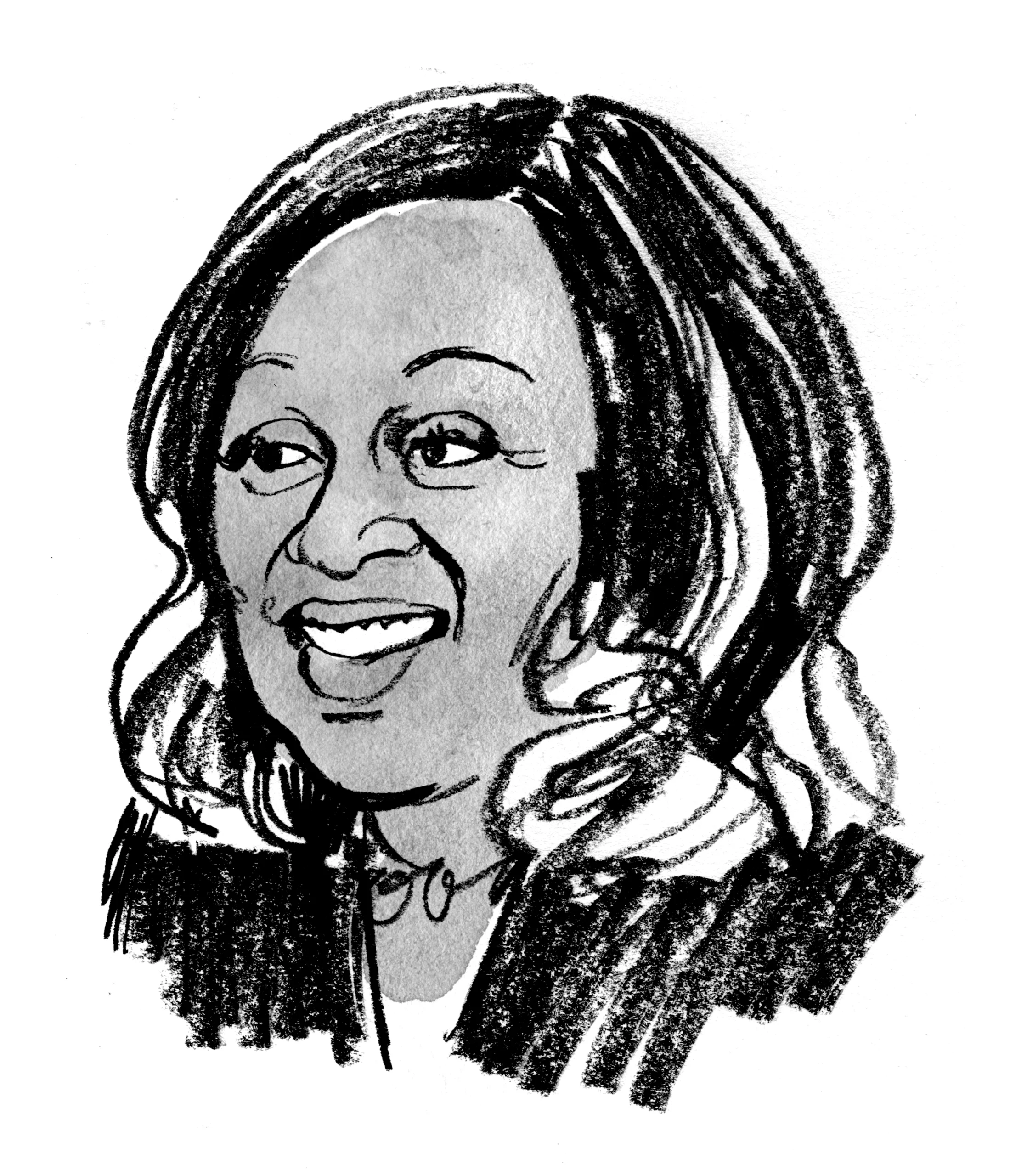
Judge Michele Rodney
Title of Offense

Manhattan State
Supreme Court,
Criminal Term
Judge Michele Rodney
Appointed
2018
Term Ends
2028
Appointed By
Governor Andrew Cuomo
Serving On
Manhattan State
Supreme Court,
Criminal Term
Education
- Manhattanville College (BA)
- St. John's University (JD)
Previously
- Prosecutor in the Bronx district attorney's office
- Dean of the School of Criminal Justice at Monroe University
- Court of Claims judge
Judicial Metrics
Excessive Sentence Reductions
Two reduced sentences, 13 years total, a higher reduction than 94.43 percent of judges statewide.
According to data compiled by the group Scrutinize, Rodney had excessive sentence findings in two cases, which is more than almost 96 percent of judges who sentenced felony cases in Nassau, Suffolk, Westchester, Orange, Rockland, Dutchess, and Putnam counties, as well as the five counties of New York City, in the time period from January 2007 to December 2025. That resulted in more years being removed from her sentences by the appeals court than almost 95 percent of judges in Scrutinize’s dataset. Reductions of this kind are unusual, but over 60 judges have had two or more sentences reduced in this way over the past two decades.
Who Is This Judge?
Michele S. Rodney has racked up some shiny trophies from legal organizations, including one as “jurist of the year,” but defense attorneys we spoke with say that Rodney also takes a punitive stance toward defendants, especially people with plea deals the attorneys suspect she might find too lenient, and starts the day’s proceedings well after they’re supposed to begin.
Rodney spent years as a prosecutor[1] in the Bronx district attorney’s office, before she was appointed as a Court of Claims judge by then-Governor Andrew Cuomo in 2018. Rodney’s long-time close and personal friend State Senator Kevin Parker seconded her nomination to the court, which hears cases where people make civil claims against the state of New York.
1. A study by the group Scrutinize and Chad Topaz found that judges who used to be prosecutors or police officers were on average 3.9 percentage points more likely to detain people pretrial than other judges, and set significantly higher cash bail amounts.
But, as happens to many judges[2] on the Court of Claims and other courts, Rodney was almost immediately shifted over to State Supreme Court to hear serious criminal cases in Manhattan.
To stay on the bench, Rodney will have to be reappointed [3]to the Court of Claims this year by Governor Kathy Hochul, which would allow her to continue to keep her seat on the State Supreme Court.
But from our review of Rodney’s time as a criminal court judge, Hochul may want to look into instances where she has oversentenced defendants, belittled them, and made them wait for hours until she shows up for work.
2. The practice of shifting over Court of Claims appointees to State Supreme Court is commonplace in order to deal with the state’s massive judge shortage. When people are appointed to the Court of Claims, many of them are almost immediately moved to a State Supreme Court seat.
3. Fun fact: In New York, even after judges are shifted over to State Supreme Court, they still need to remain in the seats to which they were originally appointed, even if they’re no longer doing many functions of their original job.

Courtroom Demeanor
As one criminal defense attorney told us of Rodney’s behavior in court, “She’s mean-spirited and completely insensitive to the well-being of everybody and especially criminal defendants.”
Multiple attorneys told us that Rodney sometimes appears to intentionally ask questions to trip defendants up during the process of taking a plea deal.
“A judge has to go through an allocution[4] to talk about all the rights they are giving up to take a plea. Every judge does this technical language a little differently, with the goal to make [defendants] understand,” one attorney explained to Hell Gate.
4. Allocution is the direct address between the judge and the defendant prior to sentencing.
“I had a client where [Rodney seemed to think] he got a better deal than he deserved. He was a younger man. He kept asking, ‘What did she say?,’ and the more he did that, the faster she spoke and the bigger the words she started using,” the attorney told us.

Take the May 2025 case of a man who eventually pleaded guilty to burglary in the third degree. While asking a multi-part question, Rodney pestered the man, telling him to “listen to what I’m saying.”
The defendant has severe cognitive issues, his attorney told us, and got confused when Rodney continued to use more sophisticated language. The attorney for this defendant said Rodney was visibly frustrated with her client, and did not change her wording for his benefit.
During a recent trip to Rodney’s Manhattan courtroom, Hell Gate and Type Investigations watched as Rodney admonished a defendant about the need to make her court dates.
The defendant, who had a cane with her, tried to explain herself, referencing medical treatments. Rodney asked for proof.
After the defendant limped out of the courtroom, Rodney mimicked hitting her gavel and joked, “I’m just like Judge Drysdale,”[5] referencing another judge on our Courts of Contempt list.
5. Judge Althea Drysdale, several attorneys told us, is known for yelling at people in her courtroom.
When Rodney set a court date that the defendant couldn’t make, the defendant leaned over to talk to her lawyer.
“I’m speaking,” Rodney said loudly. “Please don’t speak over me!”
Rodney also demanded the defendant look at her directly while she was speaking, as the defendant looked down at the table in front of her.
“I did not grant the people’s application to incarcerate her,” Rodney said to the defendant’s attorney, explaining that she did not remand the defendant into custody pretrial. “So I expect her to show up.”
Rodney ultimately agreed to make the next hearing virtual to resolve scheduling issues.
Then there’s her tardiness. Defense attorneys have told Hell Gate she often shows up hours late to court. For defendants who have been brought in from Rikers Island, this is more than a mere inconvenience. Defense attorneys told us the delays caused some clients to miss earlier buses back to jail, leaving defendants, who had been up since 5 a.m. for their scheduled court appearances, stuck and uncomfortable for hours—for what might be a 15-minute hearing.
On the day we sat in Rodney’s courtroom, the judge was an hour and fifteen minutes late.

Record on Sentencing
It’s rare for a higher court to reduce the sentence imposed by a trial judge, solely “in the interest of justice”—but for Rodney, that’s already happened twice.

In one case, the appellate division reduced the sentence Rodney doled out to an incarcerated person who broke into a prison cell and assaulted and robbed a fellow inmate, by a staggering 9 years. Originally, Rodney had ordered the defendant’s robbery and assault charges to run concurrently, for a total of 17 years. The appellate court reduced the burglary sentence in the “interest of justice.”[6]
6. Per Scrutinize and NYU Law’s Center on Race, Inequality and the Law: “In New York, appellate courts review sentences for excessiveness and can reduce them in the ‘interest of justice,’ a rare and clear signal…that a lower court judge made an exceptionally troubling choice.”
What part of the broken system does she represent?
Rodney was initially appointed to the Court of Claims, which oversees civil lawsuits against the state. But this appointment also allowed her to fill a vacancy on the State Supreme Court, which means the former prosecutor is now handling criminal cases.
Many State Supreme Court judges are elected by voters, but the New York state constitution also caps the total number of State Supreme Court judges at a much lower number than is actually required to guarantee defendants the right to a speedy trial. To increase the number of judges, the governor can appoint judges to the Court of Claims to be assigned to State Supreme Court by OCA.
As Newsday reported in 2018, this “legal loophole” has persisted because, critics say, it allows governors to sometimes hand out judgeships as patronage positions. (Nothing suggests that Rodney’s appointment by Cuomo was improper.) There are 86 Court of Claims judges, but many of them do not actually serve on the Court of Claims. As Scrutinize and Reinvent Albany write, “This arrangement affords the governor a measurable foothold in shaping the Supreme Court bench, even though no such role is provided for in the state constitution or in statute.” Court of Claims judges can be reappointed and then reassigned to State Supreme Court over and over again.
“It’s absurd,” Albany Law School professor Vincent Bonventre, who studies the state’s judicial system, told Newsday. “It’s supposed to be a very temporary appointment, but oftentimes the acting ‘Supremes’ do this for their careers.”
Rebuttal
We reached out to OCA multiple times via email and phone with a detailed list of questions. Unfortunately, OCA did not provide any answers.