
Name
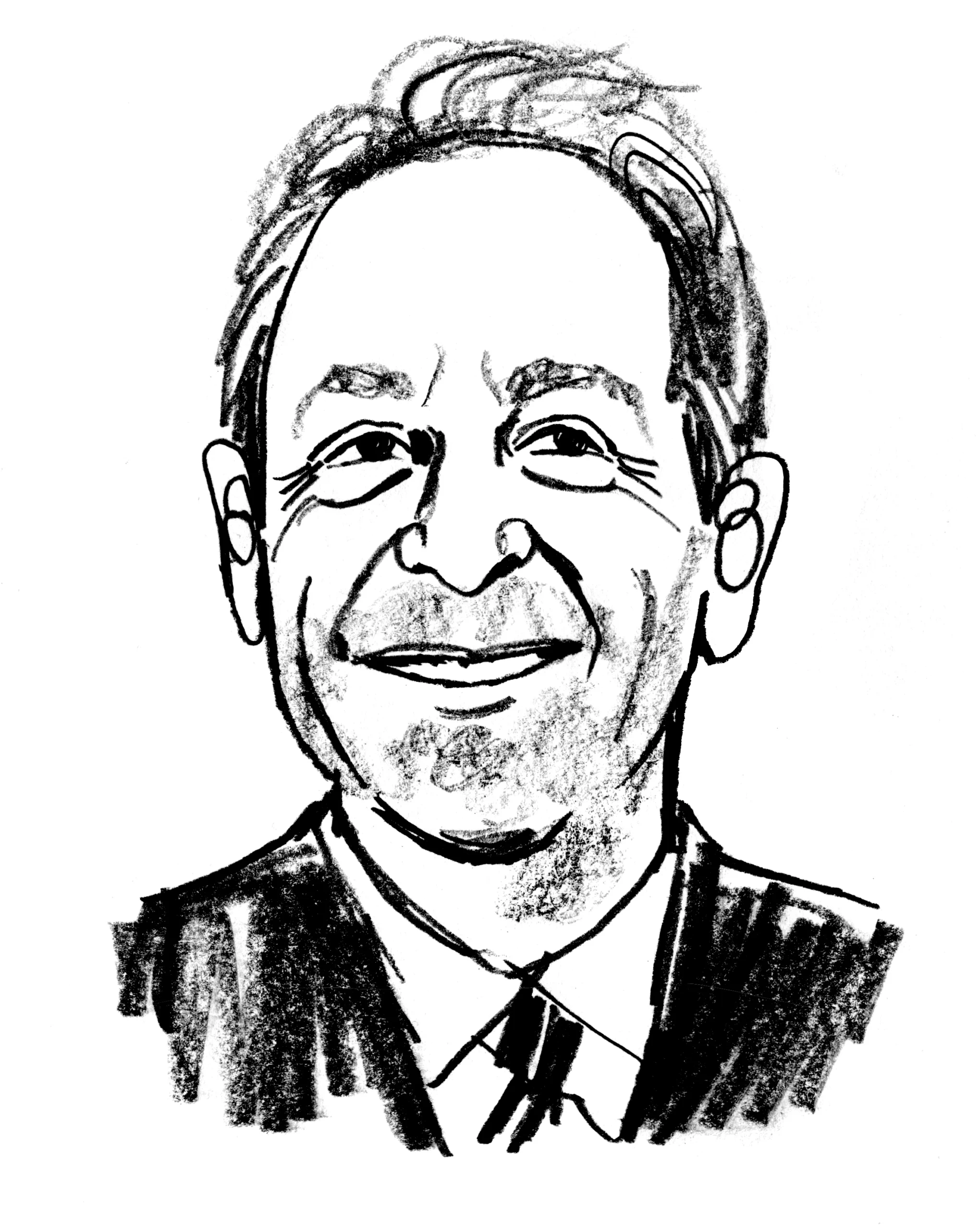
Judge John Hecht
Title of Offense

Brooklyn State
Supreme Court,
Criminal Term
Judge John Hecht
Appointed
2011
Term Ends
2030
Appointed By
Mayor Michael Bloomberg
Serving On
Brooklyn State
Supreme Court,
Criminal Term
Education
- Yale College (BA)
- Boston University School of Law (JD)
Previously
- Principal court attorney to Judge Barry Kamins
- Associate at Paul, Weiss, Rifkind, Wharton & Garrison
- Associate at Morvillo, Abramowitz, Grand, Iason & Silberberg
- Supervisor and staff attorney for the Legal Aid Society
- New York City Criminal Court judge
Judicial Metrics
Effectively blocked affordable bail:
94.1 percent of bail cases
Made commercial bonds the most affordable option:
89.4 percent of bail cases
**NOTES ON JUDICIAL METRICS**
In 2019, New York passed a law meant to end the use of unaffordable bail as a pretext for keeping poor New Yorkers in jail.
The reforms sought in part to give people being held on bail affordable ways to bond out without turning to exploitative operators like commercial bondsmen. As the Brennan Center wrote, the law “sought to make release rather than detention the default” in misdemeanor and lower-level felony cases. The legislation required judges to offer the use of partially secured surety bonds, where a small, refundable percentage of the bond is required to be paid upfront, or an unsecured surety bond, where no amount of money is required to be paid upfront, in every case where bail is set. This was meant to make it far easier for people to get their freedom pretrial. In subsequent legislative sessions, parts of the law were rolled back, giving judges more discretion.
According to a report from Scrutinize and NYU Law’s Zimroth Center in January 2025, many judges are flouting the spirit of the law. In almost eight out of 10 cases during the time period the report examined—January 2020 through December 2023—judges made commercial bonds the most affordable bail option, and in more than one out of eight cases, judges set the partially secured surety bond amount so high that the upfront payment for that bond was higher than the total cash bail amount, “effectively leaving defendants with only two bail options, cash bail and commercial bond.” The two metrics show how judges have, using Scrutinize’s terminology, “blocked” affordable bail by making the upfront deposit for a partially secured surety bond equivalent to or more expensive than upfront payments for bonds or cash bail, or “favored commercial bonds” by making paying a bondsman a nonrefundable bond premium the cheapest option.
Hecht is not the worst offender here by far—nearly 95 percent of judges were in fact worse on this metric in Scrutinize’s dataset, which runs from January 2020 through June 2025. He blocked affordable bail in 80 out of 85 of the cases that passed before him.
Who Is This Judge?
John T. Hecht worked as a clerk early in his legal career, along with stints at private law firms and a stretch as a principal court attorney to Judge Barry Kamins—a former New York State Supreme Court judge who retired amid allegations of judicial misconduct in 2014 and represented Rudy Giuliani in 2021. Hecht also put in some time at Legal Aid, working as an attorney and supervisor in the organization’s criminal defense division.
He was first appointed to New York City Civil Court in 2011, and then shifted to Criminal Court; in 2017, the Office of Court Administration appointed him to Brooklyn State Supreme Court, where he remains as of this writing.[1]
1. Judges are shifted around boroughs by OCA depending on vacancies and need.
In February 2020, the New York Post spotlighted Hecht for using what the Post described as a “loophole in bail reform” in order to keep a man charged with breaking into multiple homes in Bed-Stuy in jail at Rikers for 90 days. In December 2019, the defendant, who had been held on a second-degree burglary charge, was released due to the pending changes to bail laws, and was subsequently rearrested. In his decision, Hecht wrote, “The defendant in this case benefitted from the change in the law because he had been held on bail on what was soon to be classified as a non-qualifying offense.”
Hecht ruled that the defendant’s previous convictions, as well as the alleged thefts taking place while the defendant was out on bail for other charges, allowed the court to detain him, relying not on the specific bail reform amendment, but on a different section of the state’s criminal procedure law. “Based on all these factors, the court concluded that the least restrictive condition to reasonably assure his return was remand for a period of 90 days,” he wrote.

While Hecht was within his rights to make this decision, Jocelyn Simonson, a Brooklyn Law School professor and former public defender, told the Post she believed the judge was “going out of his way to make a ruling that he didn’t have to make,” in order to make a point about bail reform.
Record on Bail
Criminal court judges decide whether to set bail for defendants during their arraignments, which are supposed to take place within 24 hours of arrest. Defense attorneys can then request that a State Supreme Court judge review and modify those bail determinations. Bail is legally only meant to be used as collateral to ensure that defendants return to court. Judges will often set unaffordable bail amounts, which can result in increased pressure for defendants to take plea deals—or face the prospect of waiting years on Rikers Island just to have their day in court.
As of 2019, nearly 96 percent of felony convictions and 99 percent of misdemeanor convictions in New York state were the result of guilty pleas.
Hecht has, at times, imposed high bail amounts on people who have been charged with relatively minor infractions. In September 2025, a disabled man in his late 50s accused of stealing $158 worth of goods from Walgreens appeared before the judge. The defendant’s attorney pointed to her client’s history of substance abuse and a traumatic brain injury he’d sustained after being hit by a subway train two years earlier. According to court transcripts, Hecht was unmoved, citing the defendant’s prior criminal record and a missed court date.

Hecht set bail at $15,000 cash, $20,000 insurance company bond, or $30,000 partially secured bond. Those bail options likely meant that the cheapest option for the man to stay out of jail was to pay a nonrefundable fee of $1,460, according to Scrutinize’s bail calculator, to a commercial bond company.
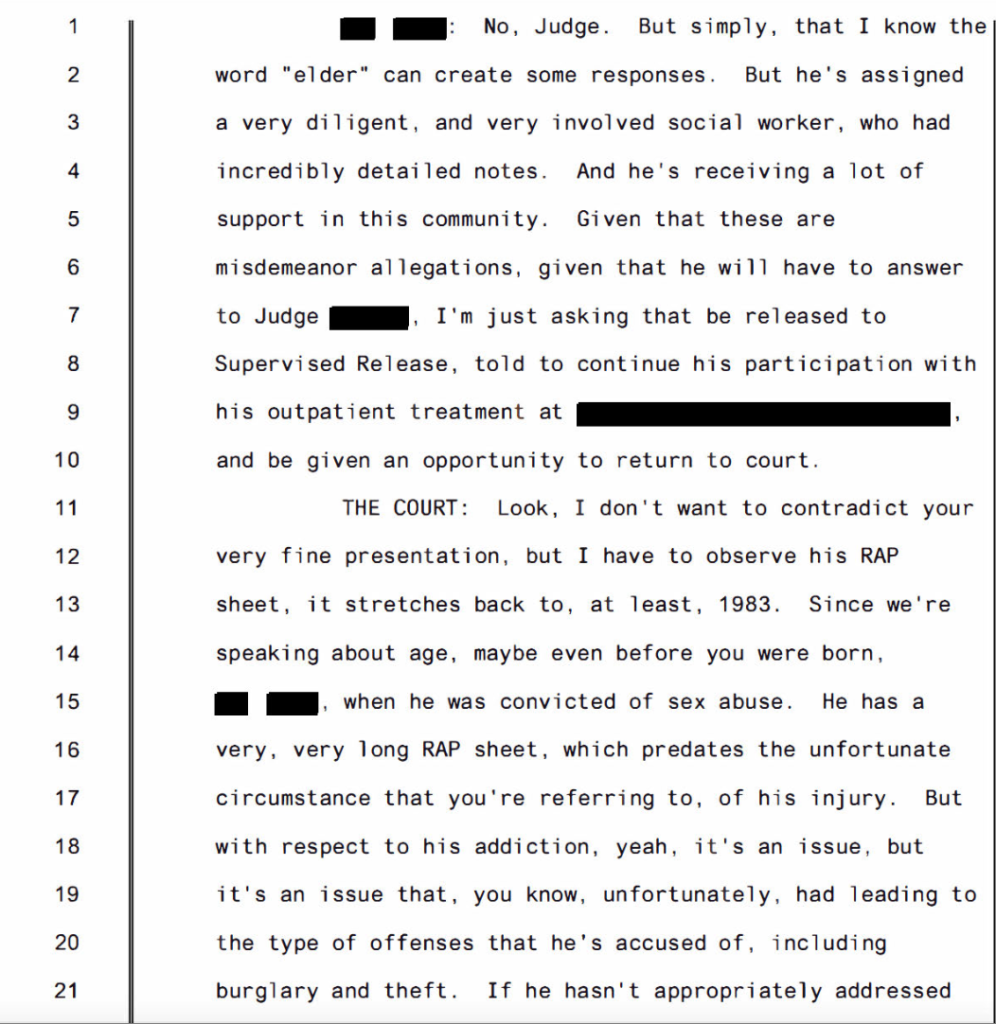
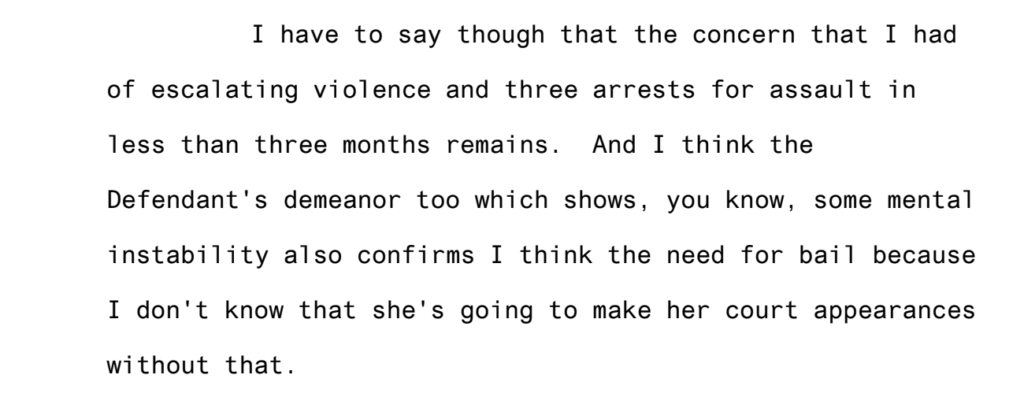
In January 2026, Hecht oversaw the case of a woman accused of robbery and assault, who her public defender noted had recently gained stable housing, mental health support, and a full-time job after getting out of the shelter system. The woman had been recommended for release by the New York City Criminal Justice Agency, which uses risk assessments to make pretrial release recommendations to the court, and her attorney argued that setting bail would force her client to go to Rikers because she could not afford to pay. Nonetheless, Hecht cited her “demeanor” as a reason he set a $5,000 cash bail, $10,000 insurance company bond, or $10,000 partially secured bond:
Record on Sentencing
Appeals courts modified his decisions three times in 2025 alone, all related to the same condition he attached to sentences when defendants entered guilty pleas: a probation condition that required them to “[s]upport dependents and meet other family responsibilities.” Hecht imposed the condition on a man convicted of criminal possession of a firearm in June 2022, and a woman convicted of third degree assault in April 2023, and a man convicted of second degree assault in May 2023. All three times, appeals courts found that Hecht had improperly imposed the condition, failing to tailor it to the particular defendants’ cases.
The same year, an appeals court issued a full-on reversal of a 2018 conviction by Hecht. According to the appellate court, the defendant’s counsel failed to move to suppress evidence—in this case, credit cards—that had been seized as part of an illegal search. That evidence was subsequently used to convict the defendant of criminal possession of a forged instrument. Hecht should have granted the defendant’s later motion to overturn the guilty verdict on the grounds of ineffective assistance of counsel, the appellate court ruled.
Courtroom Demeanor
In Hecht’s published trial court decisions, he often rules in favor of the prosecution. In one case from September 2025, Hecht found that the prosecution was “unreasonable” in waiting nearly three years after a defendant’s arrest, in connection with an alleged shooting death, to apply for a warrant to search the defendant’s phone—but nonetheless ruled that the defendant’s Fourth Amendment rights had not been violated, in part because he couldn’t use his phone anyway while incarcerated awaiting trial, and because he had already been charged with second degree murder without whatever evidence the phone contained.
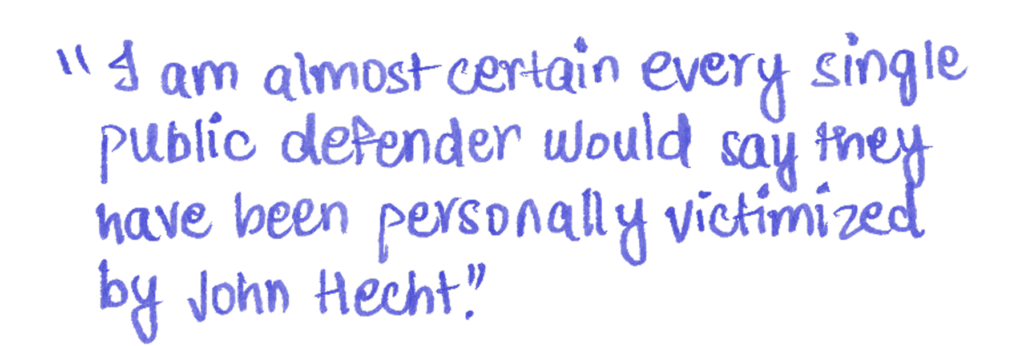
The fact that Hecht himself is a former Legal Aid public defender makes his demeanor all the more frustrating to defense attorneys who appear before him. One attorney who appears before him frequently said defense attorneys can expect to be cut off and interrupted by the judge. “It’s almost like that scene in ‘Mean Girls.’ Who has been publicly victimized by Regina George? I am almost certain every single public defender would say they have been personally victimized by John Hecht…both because of the arrogance and temperament, but also because there’s not a general sense that you’re going to get a fair shake in this courtroom,” they said.
“It could be that the kind of people who self-select from going from public defenders to judges are a certain subset,” they added. “I know a lot of people who would not want to sentence someone to prison. The people who don’t want to do that will not become judges.”
Another defense attorney put it even more bluntly: “He has to have control of the courtroom,” the attorney said of Hecht, adding that they believe the judge “enjoyed being feared.”
On a recent morning that Hell Gate and Type Investigations spent in Hecht’s courtroom, the judge presided over four cases in the course of around half an hour. The judge never took a seat—he moved from one side of his podium to the other, typed loudly between cases, and peered over the rim of his glasses as he listened to the attorneys speak.
At one point, Hecht admonished a defense attorney, because their lead attorney had assumed control of the case over email, instead of appearing in the courtroom. “We don’t just unilaterally send out an email and disrupt court processes,” the judge said. “We would have gotten this case done had we proceeded today.”
The judge set a follow-up date for trial—and when the defense attorney noted that the lead attorney had a vacation scheduled at that time, Hecht’s response was curt. “No, sorry, she’s going to have to give that up,” he said.
What part of the broken system does he represent?
Hecht is another judge who has made it to the bench with little to no oversight from the public. First appointed to New York City Civil Court in 2011, he was then shifted to Criminal Court, and then in 2017, OCA appointed him to Brooklyn State Supreme Court, where he remains as of this writing—and where he wields enormous power over people charged with serious crimes.
Rebuttal
We reached out to OCA multiple times via email and phone with a detailed list of questions. Unfortunately, OCA did not provide any answers.