
Name
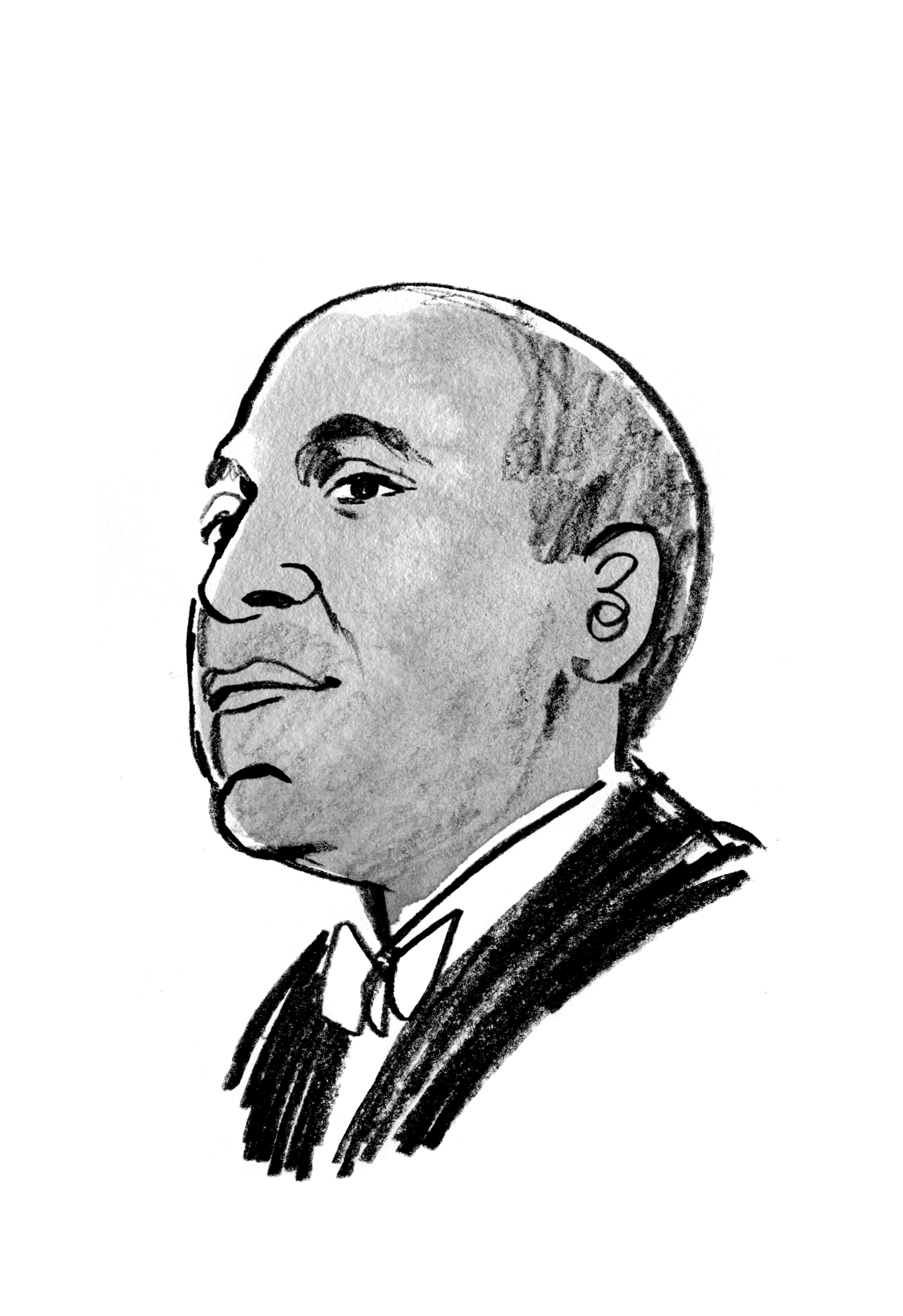
Judge Dale Fong-Frederick
Title of Offense

Brooklyn State
Supreme Court,
Criminal Term
Judge Dale Fong-Frederick
Appointed
2022
Term Ends
2032
Appointed By
Mayor Eric Adams
Serving On
Brooklyn State
Supreme Court,
Criminal Term
Education
- Queens College (BA)
- Hofstra (JD)
Previously
- Principal court attorney in Brooklyn Surrogate’s Court and State Supreme Court
- Attorney at Legal Aid in Queens and New York County Defender Services
- Supervising attorney of the Criminal Justice Clinic at Hofstra University Law School
- Board member, Society for Creative Anachronism
- Court attorney-referee in Brooklyn Surrogate's Court
- Brooklyn Criminal Court judge
Judicial Metrics
Effectively blocked affordable bail:
98.7 percent of bail cases
Made commercial bonds the most affordable option:
93.4 percent of bail cases
**NOTES ON JUDICIAL METRICS**
In 2019, New York passed a law meant to end the use of unaffordable bail as a pretext for keeping poor New Yorkers in jail.
The reforms sought in part to give people being held on bail affordable ways to bond out without turning to exploitative operators like commercial bondsmen. As the Brennan Center wrote, the law “sought to make release rather than detention the default” in misdemeanor and lower-level felony cases. The legislation required judges to offer the use of partially secured surety bonds, where a small, refundable percentage of the bond is required to be paid upfront, or an unsecured surety bond, where no amount of money is required to be paid upfront, in every case where bail is set. This was meant to make it far easier for people to get their freedom pretrial. In subsequent legislative sessions, parts of the law were rolled back, giving judges more discretion.
According to a report from Scrutinize and NYU Law’s Zimroth Center in January 2025, many judges are flouting the spirit of the law. In almost eight out of 10 cases during the time period the report examined—January 2020 through December 2023—judges made commercial bonds the most affordable bail option, and in more than one out of eight cases, judges set the partially secured surety bond amount so high that the upfront payment for that bond was higher than the total cash bail amount, “effectively leaving defendants with only two bail options, cash bail and commercial bond.” The two metrics show how judges have, using Scrutinize’s terminology, “blocked” affordable bail by making the upfront deposit for a partially secured surety bond equivalent to or more expensive than upfront payments for bonds or cash bail, or “favored commercial bonds” by making paying a bondsman a nonrefundable bond premium the cheapest option.
According to Scrutinize’s dataset, which covers January 2020 to June 2025, in 867 out of 878 cases where Fong-Frederick set bail, he did not make partially secured surety bonds the most affordable option. Fong-Frederick is not the worst offender here by far—70 percent of judges were in fact worse on this metric.
Follow the Money
Between 2024 and 2025, Fong-Frederick contributed $1,500 to the Queens Democrats. Most of that was in 2025, when he made three separate contributions totaling $1,000.[1]
1. According to the rules of the state’s chief administrative judge, incumbent judges are not allowed to make “a contribution to a political organization or candidate.” Fong-Frederick appears to be in violation of this rule. We asked both the Office of Court Administration and Judge Fong-Frederick via his staff about these donations; we did not receive a response.
Who Is This Judge?
Born to two immigrant parents, Dale Fong-Frederick was appointed by then-Mayor Eric Adams[2] to the City’s Criminal Court bench in Brooklyn in 2022, which is responsible for handling arraignments, as well as setting bail and adjudicating misdemeanors. But at the time, it wasn’t Fong-Frederick’s legal resume that made the headlines.
2. Judges are recommended for appointment to the City’s Criminal Court bench by the Mayor’s Advisory Committee on the Judiciary. For more information on the role this committee does (or sometimes doesn’t) play, go here.
No, it was his alter-ego that caught people’s attention: Sir Jibril al-Dakhil, the “first openly gay knight” in the “East Kingdom,” a character he portrayed as a member of the Society for Creative Anachronism, a nonprofit which puts on events worldwide portraying a slightly heightened and more fantastic version of the Middle Ages. Fong-Frederick played the fictional “son of a Moorish baron and a mother born of Spanish royalty” rumored “to competitively dance the pole in disguise.” He did this, he said during an SCA Zoom meeting discussing his involvement, “to not do the things I do in the mundane world.”
What does Fong-Frederick do in the mundane world? Often, he plays the local tyrant, according to people we spoke with.
One attorney told us they have seen him yell throughout the day in his courtroom, and another said they have seen him get into verbal fights with court staff.
(It appears he does, in fact, get medieval on people’s asses.)
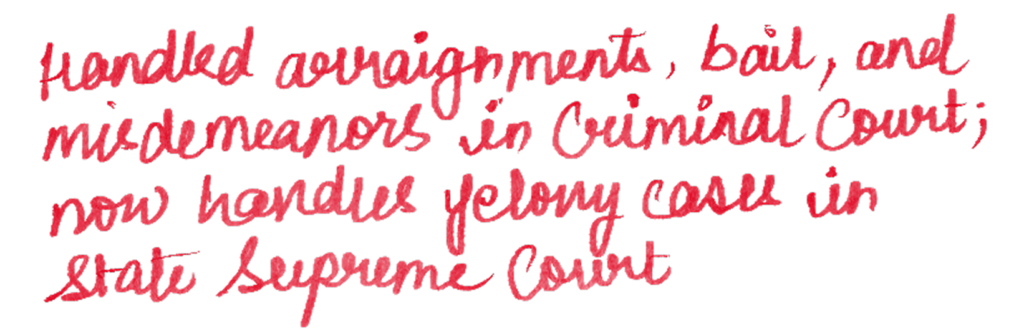
Fong-Frederick was elevated to the State Supreme Court bench in 2026 as part of an effort by the Office of Court Administration to fill vacancies.[3]
3. Judges are shifted around by OCA depending on vacancies and need.
Record on Bail
Criminal court judges decide whether to set bail for defendants during their arraignments, which are supposed to take place within 24 hours of arrest. Defense attorneys can then request that a State Supreme Court judge review and modify those bail determinations. Bail is legally only meant to be used as collateral to ensure that defendants return to court. Judges will often set unaffordable bail amounts, which can result in increased pressure for defendants to take plea deals—or face the prospect of waiting years on Rikers Island just to have their day in court.
As of 2019, nearly 96 percent of felony convictions and 99 percent of misdemeanor convictions in New York state were the result of guilty pleas.
As a Criminal Court judge, Fong-Frederick’s main responsibility in the courtroom was to handle arraignments, which includes either setting the terms of a defendant’s release pending trial, or sending them to Rikers Island pending their family or friends paying bail or posting a bond.
Judges are, at least as outlined in the state law, only supposed to set cash bail at an amount that would guarantee a defendant’s return to court—not an amount that automatically sends them to Rikers.
The April 2025 arraignment of a father of three in his thirties, who had been looking for work while on probation, is one example of how Fong-Frederick set bail as a Criminal Court judge. The defendant had recently been arrested by the NYPD for alleged gun possession, where during his arrest he threw toilet water at a cop, but was released after prosecutors failed to indict him. The arrest that landed him before Fong-Frederick was for his alleged theft of $16 worth of merchandise from a store.
The prosecutor asked Fong-Frederick to set bond at $375,000, a figure that the judge was incredulous about. The public defender argued that setting any amount of cash bail would essentially force the man to go back to Rikers since he had been unable to find work, although he was working with a jobs program to do so. They also pointed out he lived with and cared for his elderly mother in the same home he grew up in and had never missed a probation appointment.
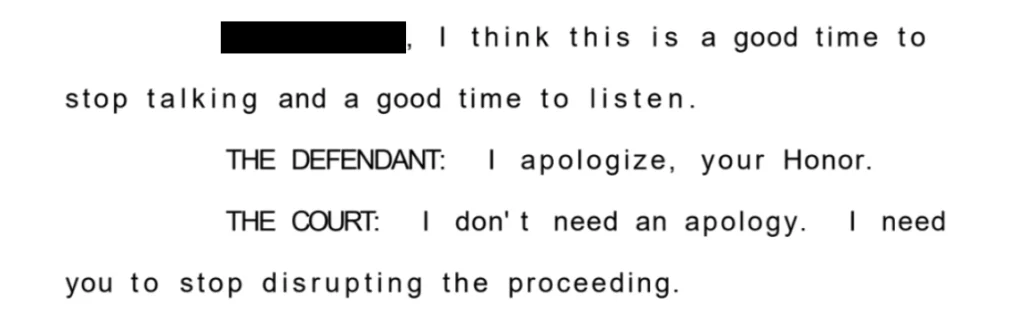
Before making his decision, Fong-Frederick first admonished the defendant for speaking with his lawyer during the proceeding.
He then set bail at $25,000 cash, $50,000 insurance company bond, or a $50,000 partially secured surety bond, making the commercial bond, and its nonrefundable deposit, the cheapest option, at $3,260.
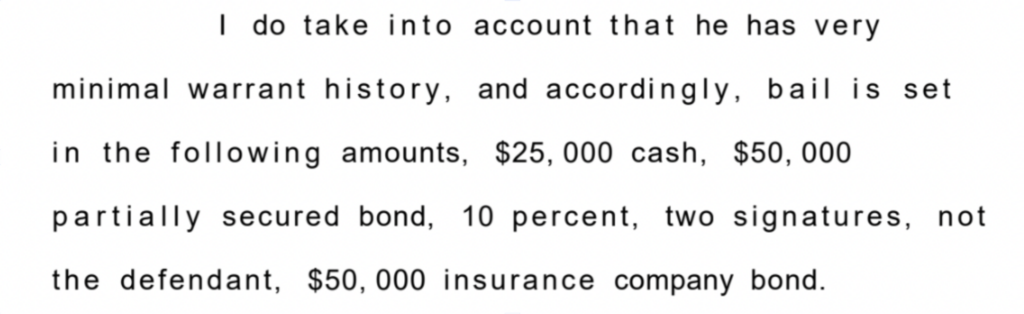
In August 2025, according to court records obtained by Hell Gate and Type Investigations, an immigrant with a pregnant wife and two stepchildren accused of stealing a moped and a necklace appeared before Fong-Frederick.
“I don’t believe that this family could even put together a few hundred dollars at this point,” his lawyer said in court. “Certainly not a few thousand, and most definitely not the amounts that are being requested by the People.”
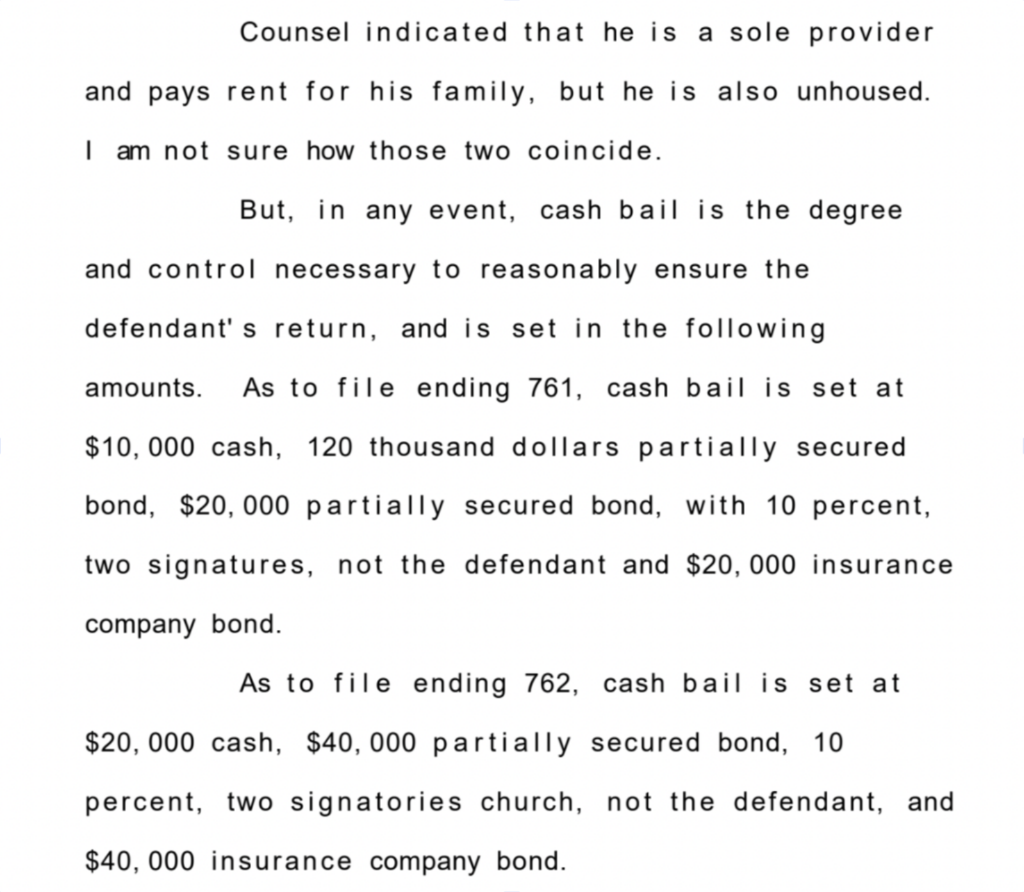
As of May 4, 2026, the man was still in Rikers.

Courtroom Demeanor
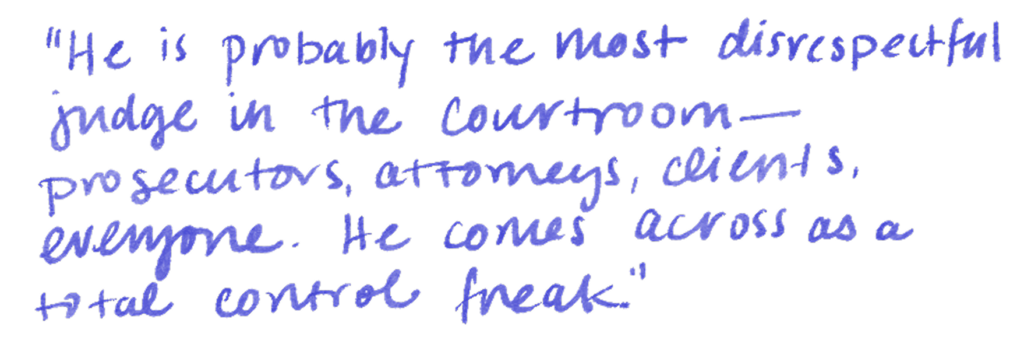
As one attorney told us of Fong-Frederick, “he comes across as a total control freak. There are some court rooms that are chaotic in Brooklyn and attorneys are whispering to clients, and he will stop everything.”
That attorney added, “He is probably the most disrespectful judge in the courtroom—prosecutors, attorneys, clients, everyone. He comes across as a total control freak. He’s gotten in fights with interpreters.”
During a recent day that Hell Gate and Type Investigations sat in Fong-Frederick’s court, the judge’s short temper was on full display. Fong-Frederick became visibly frustrated whenever attorneys spoke with their clients. “That is not happening in the courtroom, that is not happening in the courtroom!” he snapped at a defendant talking to his lawyer.
But Fong-Frederick has a much softer side when he steps off the bench. He took time on a recent morning to speak with a group of students from Sunset Park and explain his outlook on the criminal justice system from the bench.
“My perspective is that the system works,” he told the students. “What’s broken is the people.”
He went on to explain that if everyone just did their jobs correctly, court would run a lot smoother.
He then returned to the bench to hear the case of an elderly man who had missed court dates on a robbery charge—and had even been arrested for shoplifting on the day he was supposed to be in court.
The man had cancer, his lawyer explained, and was in and out of the hospital.
Prosecutors offered a plea deal to robbery in the third degree. The public defender accepted it. Fong-Frederick sentenced the man, who was coughing loudly in court, to 90 days on Rikers Island.
What part of the broken system does he represent?
Dale Fong-Frederick, who was first appointed to Criminal Court, and then shifted over to the criminal division of the State Supreme Court, has made it to the bench with little to no oversight from the public—and yet he wields enormous power over people charged with serious crimes.
Rebuttal
We reached out to OCA multiple times via email and phone with a detailed list of questions. Unfortunately, OCA did not provide any answers.