
Name
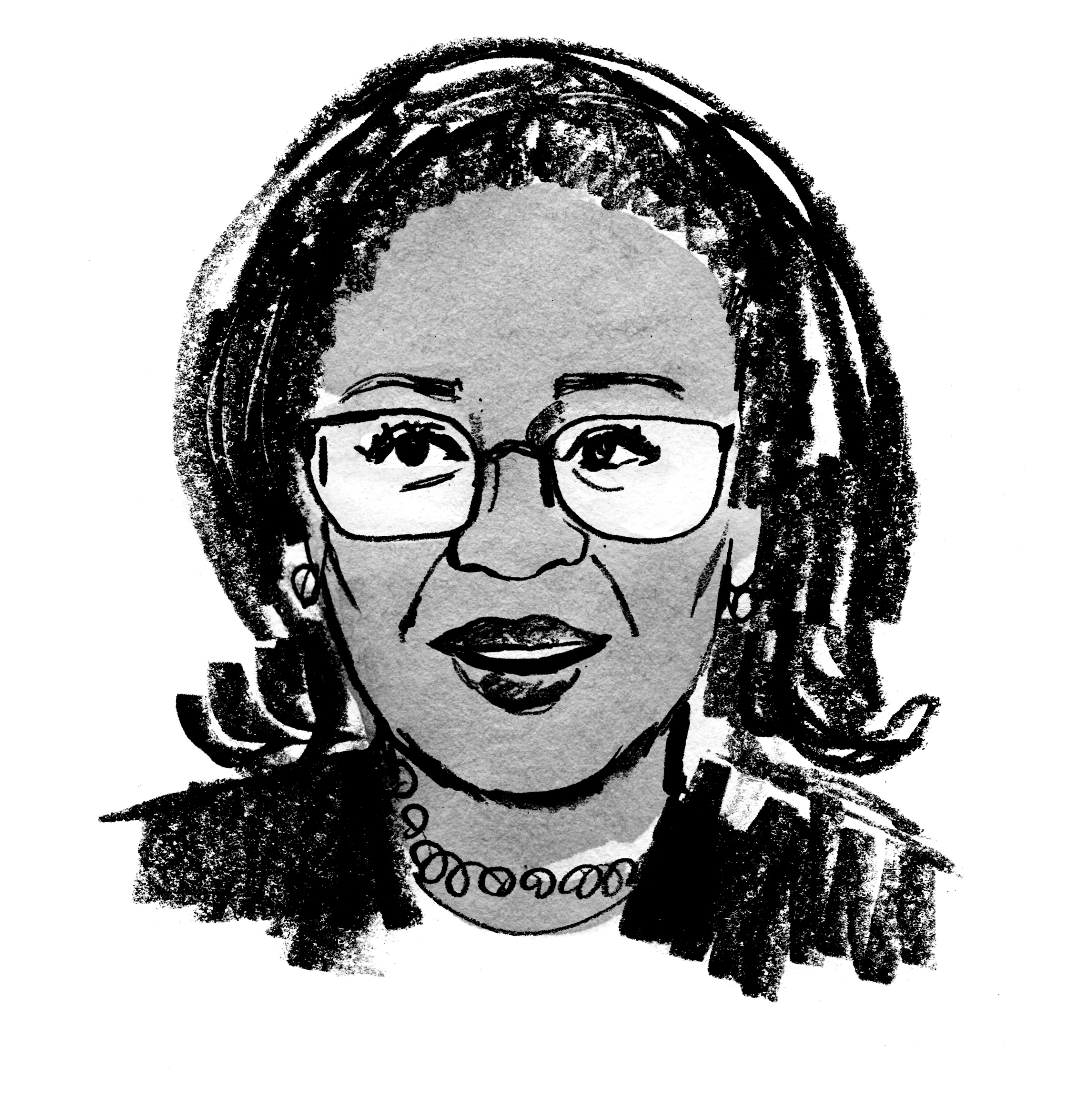
Judge Rhonda Tomlinson
Title of Offense

Brooklyn State
Supreme Court,
Criminal Term
Judge Rhonda Tomlinson
Appointed
2021
Term Ends
2031
Appointed By
Andrew Cuomo
Serving On
Brooklyn State
Supreme Court,
Criminal Term
Education
- Cornell University (BS)
- Hofstra University (JD)
Previously
- Adjunct professor, CUNY Law School
- Adjunct professor, John Jay College, Department of Law and Police Science and Department of Africana Studies
- Court attorney, New York State Supreme Court
- Staff attorney, Legal Aid Society
- Prosecutor in the Manhattan district attorney's office
- Chief Administrative Law Judge, New York State Board of Parole, Department of Corrections and Community Supervision
- Court of Claims judge
Who Is This Judge?
Back in 2019, when the City’s pledge to shut down the jails on Rikers Island by 2027 was still fresh, the de Blasio administration was working furiously to get the incarcerated population down to under 5,000, the number needed to transfer people out and close the island’s fetid, deadly facilities forever.[1]
1. The plan to close the jails on Rikers Island by 2027, which was first proposed in 2017 and then passed into law by the City Council in 2019, called for the construction of four new jails, one each in Manhattan, the Bronx, Brooklyn, and Queens. Those new jails have a total capacity of around 4,500, so the population of the jails on Rikers must be drawn down accordingly. There are around 6,600 people being held in New York City jails as of May 1.
But there was a problem: Too many New Yorkers were being locked up on Rikers for violating the terms of their parole, swelling the jail’s population.
These people were not necessarily thrown in Rikers for committing new crimes. Instead, they were found to have broken the petty and often subjective rules of their parole.[2]
2. If you smoked marijuana, or moved without telling your parole officer, or were found to have engaged in “significant misbehavior” that occurred before your parole was granted, or even did something that your parole officer didn’t like, you could be locked up on the island before being sent to an upstate prison.
At that time, Rhonda Z. Tomlinson was the chief administrative law judge on Rikers, making her the enforcer of this quasi-judicial parole system. Every day, shackled parolees would be brought in front of Tomlinson and her team of administrative law judges (ALJs) at the Rikers Island Judicial Center, a converted jailhouse with barred windows and festooned with razorwire. Lawyers for the parolees would argue for their release, while employees of the state’s prison agency, the Department of Corrections and Community Supervision (DOCCS), acted like prosecutors and demanded punishment.
Tomlinson, who started working as an ALJ on Rikers in 2014 and took on a supervisory role several years later, ran a remarkably carceral parole system during the three years she spent as the chief administrative law judge, based on the numbers. In 2018, New York sent more people to prison for parole violations than any other state in the country aside from Illinois, according to the Department of Justice’s annual survey of 42 states that report the data. In 2019, New York took the top spot: That year, 5,456 people were imprisoned on parole violations, according to state figures. An average of 660 New Yorkers were held in custody on any given day for alleged technical parole violations, i.e., ones where people break one or more of the rules in their conditions of release but do not commit a new crime.
In one notable case during Tomlinson’s tenure, a New Yorker, Shazaad Husein, was accused of violating his parole for possessing marijuana. The ALJ, Eva Moravec, sentenced him to 45 days at a state drug treatment facility, but because Husein was taking buprenorphine for heroin addiction, he was found ineligible for the program, which did not offer medication-assisted treatment[3]. Moravec eventually decided to restore Husein, but took a leave of absence and then resigned. Tomlinson took over the case, and told his lawyers he could either do a year in Rikers, or taper off of his medication to qualify for the facility, according to a Gothamist investigation. Tomlinson also denied Husein a new hearing. By the time State Supreme Court Judge Alvin Yearwood ordered Husein’s release, he had been stuck on Rikers for about six months.
3. This bafflingly cruel and stupid state policy wasn’t rectified until 2022.
Yearwood found that Husein’s right to due process of law was violated. Additionally, if it weren’t for “CALJ Tomlinson’s arbitrary decision to not fulfill ALJ Moravec’s intention, petitioner would be restored to parole supervision,” Yearwood wrote in a decision excerpted in Gothamist.[4]
4. This was just one of 50 revocation reversals that state judges ordered that year, a record high, according to another Gothamist report. A Columbia Justice Lab report from March of 2020 showed that the state’s parole system was beset by “structural racism”: Black New Yorkers were jailed at a rate 12 times higher than white New Yorkers for alleged parole violations.
Tomlinson, said one attorney who represented clients in front of the judge on Rikers, had a “controlling personality,” and compared her to the Harry Potter villain Dolores Umbridge, who bled Hogwarts of its spirit by enforcing a draconian set of rules under the veneer of gentility.
She would, according to this attorney, put an odd emphasis on decorum, despite the urgency and the high stakes of the cases coming before her. “I would come up at the beginning of the day and be like, ‘Oh my gosh, I need help with this.’ And she would stop me and interrupt me and say, ‘Good morning, [Name]. And I’d be like, ‘Good morning, judge,'” they said.
Sources told Gothamist in 2019 that Tomlinson also enforced what one anonymous parole officer described as DOCCS’ “lock everybody up” policy among her ALJs.
One anonymous official told Gothamist, “Everyone feels the pressure. And the pressure is on everyone. Violations have been ramped-up.” According to DOCCS data, the average number of New Yorkers held in New York City jails for alleged technical parole violations increased in 2018 and in 2019, before dipping in 2020 largely due to pandemic-related releases, which covers much of the time period that Tomlinson was the chief administrative law judge at Rikers. From October 2018 to October 2019, according to DOCCS data, the average daily number of New Yorkers held at City jails for alleged technical parole violations went up almost 7 percent; in the rest of the state, that number dropped by 10 percent.
While ALJs are not technically part of the judiciary, and are actually DOCCS employees, they are supposed to be impartial, and this accusation, paired with documents that Gothamist reviewed purporting to show how Tomlinson demanded an explanation from an ALJ who released a parolee after Tomlinson received a complaint from the head of DOCCS’ Parole Violations Bureau, spurred an investigation by the state’s inspector general.
In response to questions about both the parole system and the allegations against Tomlinson in the Gothamist story, a spokesperson from DOCCS told Hell Gate and Type Investigations, “The Board, which includes the Bureau of Adjudication, handles all hearings and decisions, and applies penalties when necessary in accordance with New York State law and regulations.”
Hell Gate and Type Investigations obtained the closing memo for the IG’s investigation into Tomlinson’s conduct, which was issued in January 2020. While the office stated that the allegations in the story were “unfounded” and chalked the complaints up to “personal grievances,” it also stated that Tomlinson had added a procedural step for newer ALJs before they could allow Category 1 parolees—generally, people who have been convicted of major felonies and otherwise violent crimes—to remain in their communities.
The IG’s office interviewed four ALJs who’d worked at Rikers at the time, as well as Tomlinson. Almost everyone agreed that Tomlinson instituted a policy that required new ALJs to “consult with their supervisors” prior to setting a Category 1 parolee free; Tomlinson testified that this was only temporary until they were “proficient” in the hearings. One ALJ told the IG’s office he understood that “this consultation was part of the learning process and did not take issue with reviewing his cases with his supervisors,” but at least one other ALJ did not share this understanding—we don’t quite know the specifics, however, as the report only obliquely references that some of the other ALJs “seemed to have personal grievances.” (It also notes that the other ALJs “could not provide any specific evidence to support the allegations” in the Gothamist story.)
Tomlinson further testified that she wanted new ALJs to perform this extra step when they were about to approve a Category 1 parolee for release, “because, once a parolee is revoked and restored, the decision cannot be changed, unlike a decision to impose prison time.”[5]
5. Whenever someone is found to have violated the conditions of their parole, DOCCS has the power to revoke, or take away, their right to be out in the world. In some cases, instead of reincarcerating parole violators, hearing officers might choose to “revoke and restore” an offender—that is, revoking their parole for the offense, but immediately restoring the parolee to continued supervision.
The IG’s office also acknowledged that Tomlinson overrode an ALJ’s decision, but “concluded that this situation was not universal or indicative of common practice at Rikers.” (In 2019, the IG’s office also investigated an anonymous complaint that Tomlinson taught her CUNY classes on company time back in 2005, but closed that case as “unsubstantiated.”)
After reviewing the IG’s closing memo, the attorney who represented clients in front of Tomlinson at Rikers said it was “insanely disingenuous” to accept Tomlinson’s testimony to investigators that decisions to impose prison time were subject to change. They told Hell Gate and Type Investigations that “there was one ALJ under Tomlinson who had a blanket policy to [not] restore people, with few if any exceptions.” According to their recollection, Tomlinson did not “prevent [those decisions] from occurring.” We asked Tomlinson, via OCA, if she had any comment on the allegations in the 2019 Gothamist story; we did not get a response.
In 2021, Tomlinson was nominated by then-Governor Andrew Cuomo to the Court of Claims, which hears civil suits against the state.
During a virtual hearing held by the State Senate’s Judiciary Committee as part of her confirmation process, then-State Senator Alessandra Biaggi, whose district included Rikers Island, was the only lawmaker to question Tomlinson on the record about her time at Rikers.
“No, I did not,” Tomlinson said, after Biaggi asked her about the accusations that she unduly pressured ALJs to reincarcerate parolees. “Independence in the judiciary is absolutely sacrosanct.”
“When I assumed responsibilities as administrative law judge, I created training programs that did not exist. I implemented procedures so that there would be consistency throughout all hearing proceedings, which did not exist prior to my assuming my responsibilities. With those changes, resistance arose,” Tomlinson said. She added, “However, that was thoroughly investigated, found to be completely unsubstantiated.”
Tomlinson was confirmed to the Court of Claims and designated an acting State Supreme Court judge by the Office of Court Administration.

What part of the broken system does she represent?
Tomlinson was initially appointed to the Court of Claims, which oversees civil lawsuits against the state. But this appointment also allowed her to fill a vacancy on the State Supreme Court, which means she’s now handling criminal cases.
Many State Supreme Court judges are elected by voters, but the New York state constitution also caps the total number of State Supreme Court judges at a much lower number than is actually required to guarantee defendants the right to a speedy trial. To increase the number of judges, the governor can appoint judges to the Court of Claims to be assigned to State Supreme Court by OCA.
As Newsday reported in 2018, this “legal loophole” has persisted because, critics say, it allows governors to sometimes hand out judgeships as patronage positions. (Nothing suggests that Tomlinson’s appointment by Cuomo was improper.) There are 86 Court of Claims judges, but many of them do not actually serve on the Court of Claims. As Scrutinize and Reinvent Albany write, “This arrangement affords the governor a measurable foothold in shaping the Supreme Court bench, even though no such role is provided for in the state constitution or in statute.” Court of Claims judges can be reappointed and then reassigned to State Supreme Court over and over again.
“It’s absurd,” Albany Law School professor Vincent Bonventre, who studies the state’s judicial system, told Newsday. “It’s supposed to be a very temporary appointment, but oftentimes the acting ‘Supremes’ do this for their careers.”
Rebuttal
We reached out to OCA multiple times via email and phone with a detailed list of questions. Unfortunately, OCA did not provide any answers.