
Name
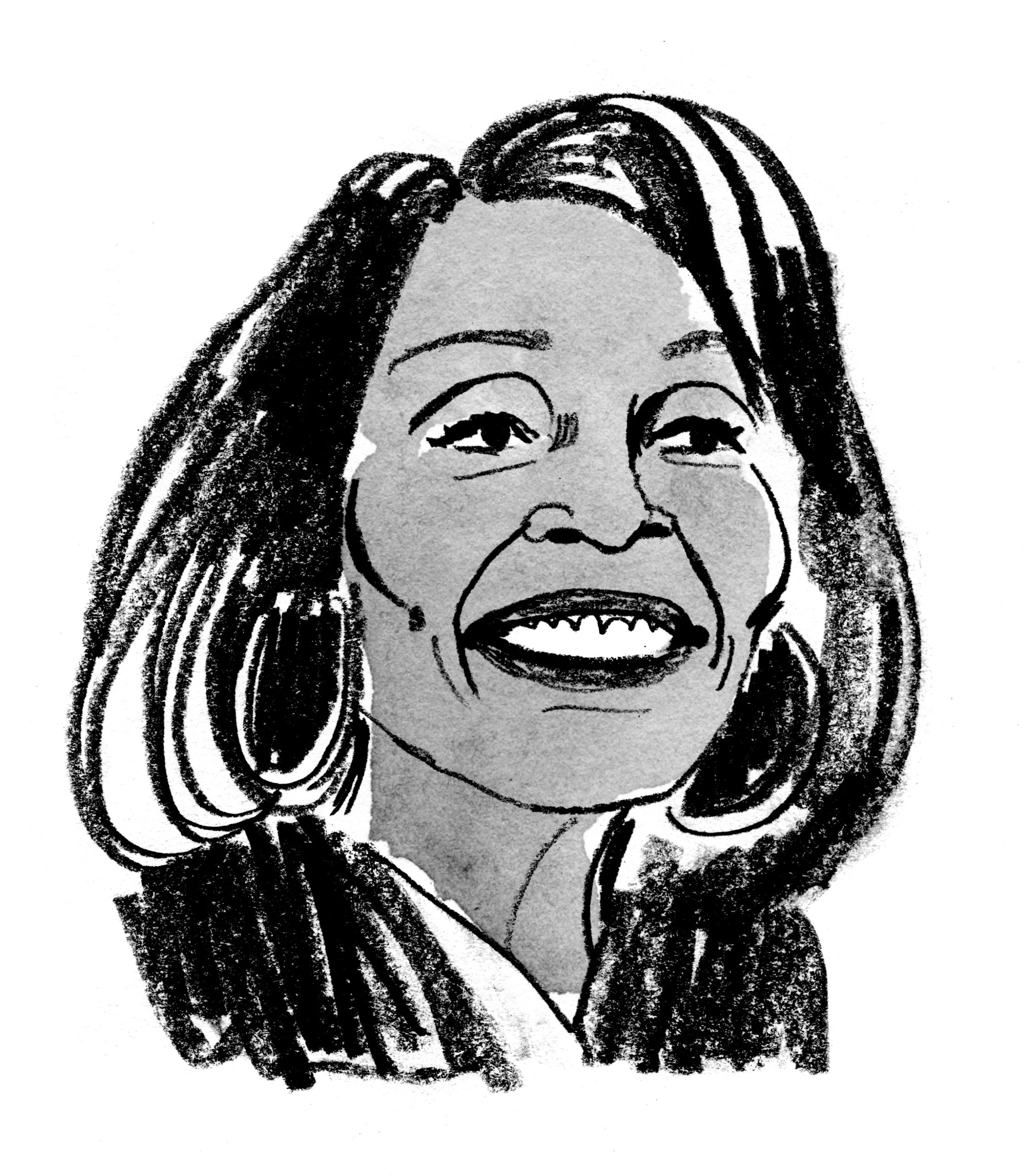
Judge Althea Drysdale
Title of Offense

Manhattan State
Supreme Court,
Criminal Term
Judge Althea Drysdale
Appointed
2015
Term Ends
2035
Appointed By
Mayor Bill de Blasio
Serving On
Manhattan State
Supreme Court,
Criminal Term
Education
- John Jay College of Criminal Justice (BA)
- Syracuse University (JD)
Previously
- Staff attorney for the criminal defense division of the Legal Aid Society
- Senior trial attorney for New York County Defender Services
- Interim Civil Court judge
- Queens Criminal Court judge
Judicial Metrics
Effectively blocked affordable bail:
100 percent of bail cases
Made commercial bonds the most affordable option:
100 percent of bail cases
**NOTES ON JUDICIAL METRICS**
In 2019, New York passed a law meant to end the use of unaffordable bail as a pretext for keeping poor New Yorkers in jail.
The reforms sought in part to give people being held on bail affordable ways to bond out without turning to exploitative operators like commercial bondsmen. As the Brennan Center wrote, the law “sought to make release rather than detention the default” in misdemeanor and lower-level felony cases. The legislation required judges to offer the use of partially secured surety bonds, where a small, refundable percentage of the bond is required to be paid upfront, or an unsecured surety bond, where no amount of money is required to be paid upfront, in every case where bail is set. This was meant to make it far easier for people to get their freedom pretrial. In subsequent legislative sessions, parts of the law were rolled back, giving judges more discretion.
According to a report from Scrutinize and NYU Law’s Zimroth Center in January 2025, many judges are flouting the spirit of the law. In almost eight out of 10 cases during the time period the report examined—January 2020 through December 2023—judges made commercial bonds the most affordable bail option, and in more than one out of eight cases, judges set the partially secured surety bond amount so high that the upfront payment for that bond was higher than the total cash bail amount, “effectively leaving defendants with only two bail options, cash bail and commercial bond.” The two metrics show how judges have, using Scrutinize’s terminology, “blocked” affordable bail by making the upfront deposit for a partially secured surety bond equivalent to or more expensive than upfront payments for bonds or cash bail, or “favored commercial bonds” by making paying a bondsman a nonrefundable bond premium the cheapest option.
According to Scrutinize’s dataset, which runs from January 2020 through June 2025, Drysdale effectively blocked affordable bail in all 101 of the cases that went before her.
Follow the Money:
From 2017 to 2018 while a Criminal Court judge in Queens, Drysdale donated $225 to the Manhattan Democratic Party. In 2018, she also gave a total of $225 to two Manhattan Democratic clubs.[1]
1. According to the rules of the state’s chief administrative judge, incumbent judges are not allowed to make “a contribution to a political organization or candidate” — except in the months surrounding either a primary (if they are running for a seat on Civil Court) or the judicial nominating convention (if running for State Supreme Court). These donations by Drysdale, who was pursuing a nomination from the Manhattan Democratic Party for a State Supreme Court seat in 2017 and 2018, fall in this window. We asked Judge Drysdale via the Office of Court Administration about these donations; we did not receive a response.
Update: A previous version of this profile noted that Drysdale’s political contributions possibly violated the rules of the state’s chief administrative judge. We’ve updated the story to reflect that those donations fell within a window of time when she was allowed to make contributions.
Who Is This Judge?
After passing the bar in 1988 and working as a defense attorney for the Legal Aid Society and New York County Defender Services for roughly two decades, Drysdale was appointed by then-Mayor Bill de Blasio as an interim Civil Court judge in 2015. At the time, the mayor praised the crop of 28 mayoral appointments, in part, for their diversity (20 of the appointments were women; more than half were Black, Latine, or Asian; and four were openly gay). Despite this win for representation, de Blasio admitted at the time that he hadn’t had a lot of time to screen the candidates after a committee vetted them, stating that his interviews with the new judges were “somewhere in between” “a typical personnel interview and speed dating.”
The next year, Mayor de Blasio appointed Drysdale to Criminal Court in Queens, where she handled misdemeanors, arraignments, and set bail. In 2019, she was appointed by the Office of Court Administration to a position on the State Supreme Court in Manhattan, where she presides over felony cases.[2]
2. Judges are shifted around by OCA depending on vacancies and need. It appears Drysdale was angling for a seat on State Supreme Court as early as 2017—that year, campaign finance records show Drysdale made a $100 donation to an “Althea Drysdale For Supreme Court” campaign, and received $1,750 in donations from four different New York City attorneys and firms. In 2019,she was rated as “highly qualified” for a State Supreme Court seat by the Manhattan Democrats’ judicial screening panel—but was not nominated by the county party for one of the open seats that year. Despite this, she still got her wish to serve on the State Supreme Court, thanks to the 2019 OCA promotion.
Now that New Yorkers have seen Judge Drysdale in action for a decade, some of her patterns have become apparent: The judgemakes commercial bonds the most affordable option for a defendant in 100 percent of her bail cases, according to data from Scrutinize, making her worse on this metric than nearly 85 percent of judges in the state who heard bail cases between January 2020 and June 2025.
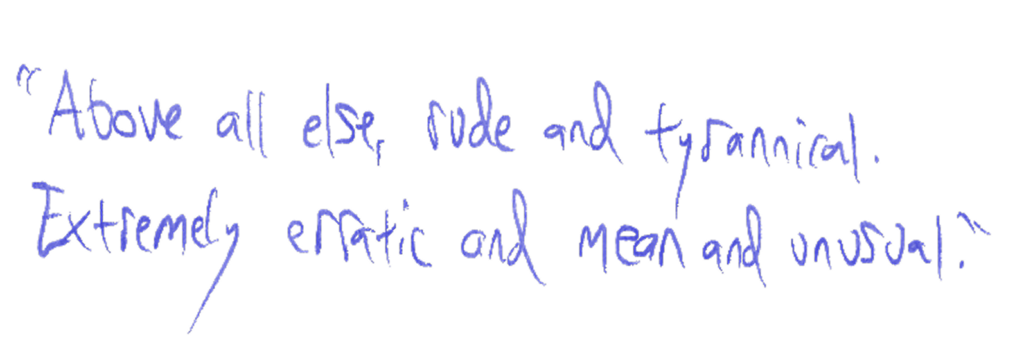
Beyond her decisionmaking, Drysdale has a tendency to let her temper take over her courtroom. A courtwatcher used the word “bizarre” to describe Drysdale’s behavior, and a defense attorney who has appeared before her called her behavior “erratic” and “unusual.” That lawyer as well as another defense attorney told us that they have seen her scream at lawyers; one of those attorneys, as well as the courtwatcher, said they have seen her yell at spectators in her courtroom.
The attorney who described her behavior as “erratic” and “unusual” also said that Drysdale likes to go “off the record,”—meaning the court reporter stops recording—to berate attorneys, something a third attorney also told us. “If she is not treated by both the client and the attorney with the adequate level of obsequiousness, she will make it impossible to get through an appearance,” one of the attorneys said. “She cuts people off and refuses to let you make critical records, keeping all her comments and decisions out of writing and thereby unreviewable.”
The Mamdani administration reappointed her to the bench for another 10 years this January.
Record on Bail
As a Criminal Court judge, one of Drysdale’s main responsibilities was to set bail, and as a State Supreme Court judge, she continues to make bail decisions, thus playing a role in how many New Yorkers are sent to Rikers Island and how long they stay there.[3]
3. Criminal court judges decide whether to set bail for defendants during their arraignments, which are supposed to take place within 24 hours of arrest. Defense attorneys can then request that a State Supreme Court judge review and modify those bail determinations. Bail is legally only meant to be used as collateral to ensure that defendants return to court. Judges will often set unaffordable bail amounts, which can result in increased pressure for defendants to take plea deals—or face the prospect of waiting years on Rikers Island just to have their day in court.
As of 2019, nearly 96 percent of felony convictions and 99 percent of misdemeanor convictions in New York state were the result of guilty pleas.
Despite her previous career as a public defender, Drysdale can be harsh to defendants, according to the defense attorneys we spoke with. “She’s swung so pro-prosecution,” one attorney said, adding that her treatment of defendants and her courtroom demeanor is “absolutely baffling.”
One example of Drysdale’s approach to bail: In a case that later landed in Drysdale’s courtroom, a Criminal Court judge set a $20,000 cash bail, $60,000 insured bond, or $60,000 partially secured surety bond for a man charged with entering a building with the intent to commit a crime and of stealing something worth between $1,000 and $3,000. At the time, the defendant was also facing criminal charges filed against him previously, which the judge took into consideration when she set bail. The defendant pleaded not guilty and was unable to bail out, so was sent to Rikers.
A few months later, the defendant’s attorney challenged the bail decision in court in front of Drysdale, after old charges against him were dropped and sealed. Despite the fact that the initial bail order was set based on those dropped charges, Drysdale decided to continue the bail conditions, and the man stayed locked up on Rikers. The New York County Defender Services then filed a habeas petition to challenge the lawfulness of his imprisonment—and in December 2025, an appeals court overturned Drysdale’s bail decision, finding that her court had “abused its discretion” in continuing monetary bail. It said Drysdale had not complied with the law in her consideration of bail in the defendant’s case, and that it could not “discern” Drysdale’s rationale for the decision, because she “did not identify one.” The man was released.
On the day we spent in Drysdale’s courtroom, Hell Gate and Type Investigations observed Drysdale making several bail decisions. One lawyer asked for their client, brought in from Rikers, to be released. The man was charged with grand larceny. The client’s bail was set at $500, and he had been at Rikers since Christmas (it was now mid-April). “Someone from a different family with different means would have been out right after Christmas,” his attorney pleaded.
“I see no reasons to change bail conditions,” Drysdale told the lawyer.
Another case before Drysdale that day involved a defendant in his late teens. He was charged with being part of a group of people who ran up on a couple leaving a Broadway show, with one member of the group allegedly pointing a gun at the couple and another snatching an iPhone from their victim’s pocket. He was charged with robbery in the first degree.
The teen had been granted supervised release at his arraignment, where he was charged with robbery in the first degree. He was then formally indicted, and that day before Drysdale, the prosecutors were asking that he be locked up pretrial. Prosecutors also noted in court that the teen defendant—who didn’t speak English and was assisted by a translator—could face immigration consequences.
“I must strenuously object to the granting of bail,” his attorney pleaded with Judge Drysdale. His client, he said, had kept both of his court appointments since his arraignment and lived with his aunt in Queens. “This is his first arrest, and there is no indication that my client had the gun,” he said. The judge apparently wasn’t convinced.
She quickly handed down her decision: “[He’s] charged with a bail-eligible offense, and monetary bail is reasonably necessary for ensuring the defendant returns to court,” she said. She set bail of $20,000 cash, $100,000 commercial insurance bond, or a $100,000 partially secured surety bond.
The teen was immediately directed to stand up, his arms behind his back as court officers clicked a pair of handcuffs onto his wrists and tightened them. He was then walked out of the courtroom, where he would shortly be sent to Rikers Island.
Overheard speaking to the translator in the hall after, the teen’s attorney seemed shocked that his young client was being sent to Rikers. “The thing is, as soon as he taps out of Rikers, ICE gets him,” his attorney said. “The family would need to come up with $10,000 to get him out…you get it back, but…” he trailed off.
Courtroom Demeanor
One of the defense attorneys we spoke with described Drysdale as “tyrannical,” running her courtroom in a way that seems “designed to be humiliating.”
The other two defense attorneys we spoke with who often appear in her courtroom said she frequently cuts attorneys off, or refuses to let them speak at all. “I didn’t get the chance to raise issues for my client because she refused to let me speak,” one recalled.
“It becomes a real legal problem when I, as a lawyer, am not allowed to put legal arguments on the record to preserve my client’s rights because she will not let me speak. Your client might be in danger of taking a plea because he might believe you’re actually incompetent,” the attorney who described Drysdale as “tyrannical” said.
The judge also demands total deference, two of the defense attorneys said, and will train her ire on anyone she feels is being disrespectful.
“She will yell at lawyers based on how they walk into the courtroom. She will yell at people for their body language or for touching their hair. She will stop proceedings to yell at random people in the audience for infractions that aren’t actual rules. Sometimes if you don’t say the phrase ‘your honor’ after every sentence, she will scream at you,” said one of the defense attorneys.

Cory Rowe, an associate professor of criminal justice at LaGuardia Community College, said she sometimes takes her students to sit in courtrooms, including in Drysdale’s, to watch the proceedings. One time, she said, Drysdale flew into a rage when one of her students whispered to another during a hearing. First, the judge yelled at the student, then she demanded the student come and sit next to her on the bench while she called and handled real cases.
“I could see on my student’s face how terrifying it was to be brought to the bench inexplicably after being yelled at, and then imagine being brought out and being judged with an adolescent sitting there next to the judge,” Rowe said.
She added, “Her behavior is so flagrant, I have to wonder when I sit in her courtroom, do the defendants think to themselves, ‘Is this just a banana court, is this just the Mad Hatter’s Tea Party?’ I would be in a panic if that was my judge, because she’s so wildly unpredictable.”
Her decisions themselves can be middle-of-the-road, one of the defense attorneys said. Sometimes, she will go out of her way to broker a fair resolution, another of the defense attorneys said.
On a recent day in Drysdale’s courtroom, Hell Gate and Type Investigations observed Drysdale showing understanding and leniency toward people dealing with drug addiction, repeatedly sending their cases to diversion court. “Continue to work the program, but it’s not one-size-fits-all,” she told one defendant who had been arrested for grand larceny. “Maybe find another program that works for you.”
But she also displayed much of the behavior described by attorneys. When one defendant’s case was called, Drysdale quickly told the court reporter she was going “off the record.”
“I need you to get him into a program, ASAP,” she told the man’s public defender. “Either he’s tired or he’s on something. I’m going to pretend that because I wear a black robe, my eyes don’t work,” she said. “If this had gone correctly, he would already be in treatment.”
Drysdale also repeatedly asked court officers to separate people in the gallery who were whispering to one another.
It appears her behavior is known even among her colleagues.In another courtroom on a different day, a judge banged her gavel at a defendant, joking, “that’s my Drysdale impression.”
What part of the broken system does she represent?
Althea Drysdale, who was first appointed to Civil Court, then Criminal Court, and then shifted over to the criminal division of the State Supreme Court, is another judge who has made it to the bench with little to no oversight from the public.
Rebuttal
We reached out to OCA multiple times via email and phone with a detailed list of questions. Unfortunately, OCA did not provide any answers.