
Name
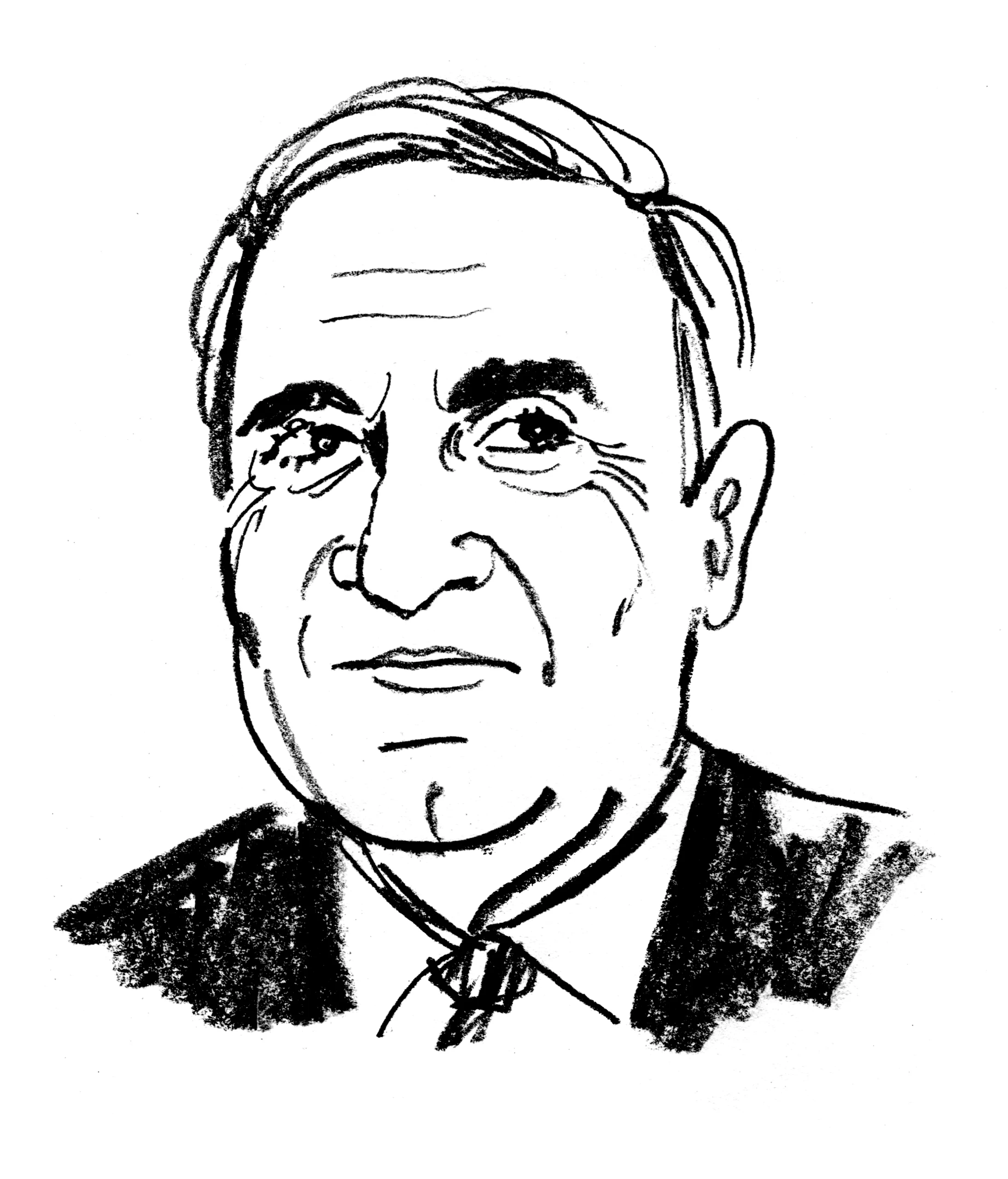
Judge Michael Aloise
Title of Offense

Queens State
Supreme Court,
Criminal Term
Judge Michael Aloise
Elected
1997
Term Ends
2027
Serving On
Queens State
Supreme Court,
Criminal Term
Education
- St. John's University (JD)
Previously
- Prosecutor in the Queens district attorney's office
- Queens Civil Court judge
Judicial Metrics
Total Excessive Sentence Reductions:
Three reduced sentences, 45 years, a higher reduction than 99.55 percent of judges in Scrutinize’s dataset*
Publication Rate:
0 per year**
Evidence Suppression Reversal Rate: Seven out of 59 evidence suppression-related appeals***
* According to data compiled by the group Scrutinize, Aloise had excessive sentence findings in three cases, which is more than almost 98 percent of judges who sentenced felony cases in Nassau, Suffolk, Westchester, Orange, Rockland, Dutchess, and Putnam counties, as well as the five counties of New York City, in the time period from January 2007 to December 2025. That resulted in more years being removed from his sentences by the appeals court than 99.55 percent of judges in Scrutinize’s dataset. Reductions of this kind are unusual, but over 60 judges have had two or more sentences reduced in this way over the past two decades.
** In New York, judges effectively decide whether their written decisions should be public or not. Being able to get a sense of a judge’s reasoning can help the public determine whether they’re fit for the bench, especially elected judges like Aloise. Scrutinize notes that Aloise has not published a decision in over a decade. According to the judicial watchdog group, of the 600 New York criminal court judges who published at least one decision between 2010 and 2022, 356 of those judges published three or fewer decisions in that 12-year period.
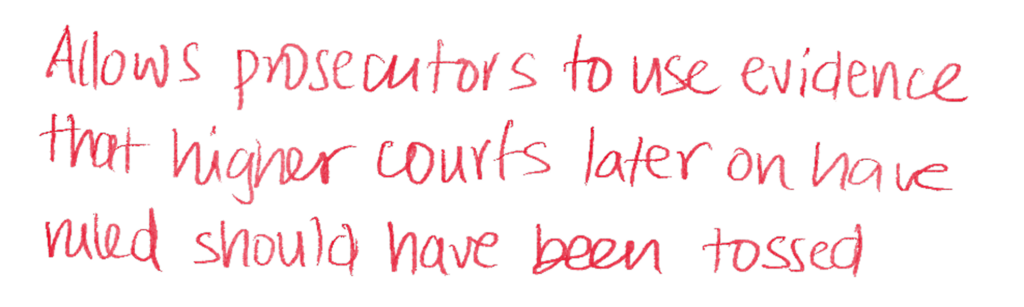
*** Higher courts have ruled in favor of seven out of 59 defendants who file appeals arguing that Aloise allowed evidence that should have been excluded at trial—that’s higher than 87.45 percent of all judges in the state who have had at least evidence suppression-related appeal between 2007 and 2025.
Who Is This Judge?
Michael Aloise may be the perfect example of how and why criminal courts in Queens seem so biased against defendants. He has fought to stay on the bench after turning 70, the mandatory retirement age for judges in New York, with a former prosecutor speaking up on his behalf as he agitated to stay on the bench.
Aloise was a prosecutor at the Queens district attorney’s office[1], before eventually rising to a bureau chief in the office.
1. A study by the group Scrutinize and Chad Topaz found that judges who used to be prosecutors or police officers were on average 3.9 percentage points more likely to detain people pretrial than other judges, and set significantly higher cash bail amounts.
He then pivoted to the bench. Aloise is the son of the late Gloria Aloise, who was a Democratic district leader in Astoria for over two decades, and the grandson of Ralph DeMarco, a legendary leader of the Queens Democrats during the 1960s and 1970s (there’s a park named for him in Astoria). In 1998, Aloise ran unopposed for a Civil Court seat in Queens. In 2003, he was chosen by leaders in the county party to be on the ballot for a State Supreme Court judgeship and was duly elected to the State Supreme Court bench, and renominated and reelected in 2017 after serving his first 14-year term.

Judges are required by the state constitution to step down when they turn 70, barring special permission from the Administrative Board of the Courts. In 2025, the year Aloise turned 70, he requested, and was granted, the ability to stay on until at least 2027.
Allowing Aloise to stay on the bench was controversial. The Center for Community Alternatives publicly urged court officials not to grant him an extension, citing concerns about his record of legal errors, allegations of bias against defendants, and his high suppression reversal rate. CCA pointed in particular to cases over which Aloise presided where defendants’ sentences were later shortened or evidence rulings were overturned.
“Justice Michael B. Aloise has repeatedly infringed defendants’ constitutional rights, including the rights to a fair and public trial, to present a complete defense, and to confront adverse witnesses,” Peter Martin, the Center for Community Alternatives director of judicial accountability, said in a statement at the time. “When deciding which judges to allow to serve past the state’s mandatory retirement age, the Administrative Board has a vital public responsibility: ensuring that no judge is allowed to continue serving without showing that he or she meets the high standards of legal knowledge, impartiality, and integrity that we demand of every judge.”
Despite these criticisms, the Administrative Board allowed Aloise to continue serving beyond age 70—a process that requires the sign-off of court leadership, including the chief judge and the presiding justices of the appellate divisions. At the time, they provided no explanation as to why. The Office of Court Administration did not respond to a question about why the board approved Aloise’s extension.
Impartiality
When it comes to deciding what evidence can be admitted, critics say Aloise can show little distinction between the job of the prosecutor and his own role.
Higher courts have reversed convictions in cases presided over by Aloise in which he: allowed prosecutors to impeach a witness based on her earlier grand jury testimony, after she said she could no longer identify a shooter; allowed prosecutors to present hearsay evidence ruling out a potential culprit; improperly allowed prosecutors to present anonymous 911 calls that contained unreliable hearsay as evidence; allowed prosecutors to present what the appeals court described as “extensive and prejudicial evidence regarding alleged uncharged complaints”;[2] and allowed prosecutors to introduce a nontestifying codefendant’s statement that placed the defendant at the scene, thereby violating the Sixth Amendment[3] right to confrontation.
2. In that same trial, Aloise participated in a read-back of the trial transcript to the jury. The appeals court said Aloise shouldn’t have done that, writing that it could “unwittingly and erroneously convey to the jury that the court is aligned with the party or counsel whose role the court has assumed in the read-back.”
3. Under the Sixth Amendment, you have the right to confront your accuser. The prosecution failed to call this essential witness to court, but still used their testimony.
In one instance where a higher court reversed a verdict, Aloise violated the defendant’s constitutional right to a public trial by kicking a courtroom spectator out “for the rest of this trial” without warning after observing that spectator sleeping.
In the high-profile murder case of East New York resident Chanel Lewis, who was accused of killing Karina Vetrano, Aloise declared a mistrial after just a day and a half of jury deliberations. In this situation, judges will often issue an Allen charge, which instructs the jury to hunker down and deliver a verdict, but Aloise declined to do so. (Lewis’s defense had moved for a mistrial, as defense counsel often do when juries announce they are deadlocked.)
It was later revealed that several of the jurors were leaning toward acquitting Lewis. The next year, in 2019, prosecutors retried the case and introduced new evidence against Lewis, who was found guilty. This February, Aloise denied a motion from Lewis’s new lawyer, the veteran defense attorney Ron Kuby, to vacate his conviction based on the way that the police gathered Lewis’s DNA, which Kuby described as a “racial dragnet” targeting Black men.
Kuby once said of Aloise, “Judge Aloise has never met a criminal defendant he didn’t want to put away—unless that person had a badge.” In 2018, NYPD Detective Kevin Desormeau was found guilty of lying under oath about a drug arrest. The case underlined a troubling pattern among NYPD officers of fabricating evidence while trying to make arrests.
But when it came time for sentencing, Aloise lashed out against the prosecution, who had asked that Desormeau be sentenced to up to six months in prison for lying under oath.
“This entire case disgusts the court,” Aloise told Desormeau. “I will not become complicit in the district attorney’s hypocrisy by incarcerating you.”
Aloise sentenced him to three years of probation and gave him a $500 fine.
Aloise is also an example of a dynamic particular to the justice system in Queens—the hiring of direct relatives of judges by the district attorney’s office. Aloise’s daughter, Nicole, previouslyworked as a prosecutor in the Queens DA’s office (and then mounted an unsuccessful run for Nassau County district attorney) and his son-in-law, Nicole’s husband Barry Frankenstein, is currently a deputy bureau chief in the DA’s office. At one point in 2018, at least six judges practicing in the state courts in the borough had children working in the Queens DA’s office as prosecutors.[4]
4. The New York Law Journal looked into another case tried by Aloise’s daughter, ADA Nicole Aloise. In 2018, after ADA Aloise did not respond to a defense filing, Judge Gregory Lasak, another judge with a child working for the Queens DA at the time, instructed ADA Aloise to call an additional witness and introduce specific evidence, according to the Journal’s reporting. In a response to the New York Law Journal, the Queens DA’s office had this to say: “Sadly, the insinuations that defendants are being treated unfairly because a handful of prosecutors enjoy an untoward advantage…are ones that will never find a forum to be aired and disproven. Unfortunately, all of us who practice in this community must endure this reputational harm.” OCA did not respond to a request for comment about the allegations of Lasak’s role in ADA Aloise’s case.
Aloise is reported to have sat in court during one of his daughter’s trials in front of another judge. But this is Queens, after all, and that type of chumminess between judges and prosecutors is common. Look at Aloise at the Mets game with a bunch of prosecutors!
Record on Sentencing
When the higher courts are not busy overturning convictions from his court, they are cutting down the length of prison sentences Aloise doles out. Twice, the appeals court found that Aloise improperly gave people consecutive sentences for the same underlying act instead of having their time run concurrently. In one of those cases, he sentenced someone to 25 years to life in prison, and then another 25 years, even though the conduct for both crimes was the exact same.
In 2012, Aloise also refused to allow the resentencing of someone who served more than 14 years in prison for a low-level drug crime committed when he was 19 years old, and who was sentenced in 1993 under the state’s draconian Rockefeller Drug Laws. After New York began rolling back the drug laws in 2004, eligible defendants could petition for resentencing to shorten their probation or reduce their sentences, and could also seek to have certain convictions sealed.
The defendant appealed, requesting he be resentenced. But Aloise turned down his appeal, citing his violation of certain parole rules, even though the individual did not commit any crimes or test positive on drug tests while out on parole. The higher court demanded that Aloise reduce the sentence for the defendant in accordance with the repeal of the drug laws. (No longer having a felony conviction on his record would positively impact his ability to find work or qualify for government benefits.)
Aloise’s time on the bench might finally be ending, but his long legacy of errors and alleged bias will linger far longer. Chanel Lewis’s lawyer said, for example, that they plan to appeal his conviction.
What part of the broken system does he represent?
The pipeline from prosecutor to judge in criminal courts is fairly well-established, with its attendant allegations of bias. And those closest to the Queens Democratic Party often rise to positions like judgeships. We reached out multiple times to the Queens Dems for comment; they did not respond.
Then there’s what the New York Law Journal once described as the “Queens tradition of judges and ADAs coming from the same family.” Notably, the state’s judicial ethics board is silent on the question of what judges should do if they have relatives working in the same prosecutors office that regularly appears before them—only that they must recuse themselves if a relative within the fourth degree is a lawyer or material witness in a case in front of them.
Rebuttal
We reached out to OCA multiple times via email and phone with a detailed list of questions. Unfortunately, OCA did not provide any answers.